What Happened to the Tribes of Dan—and Ephraim?
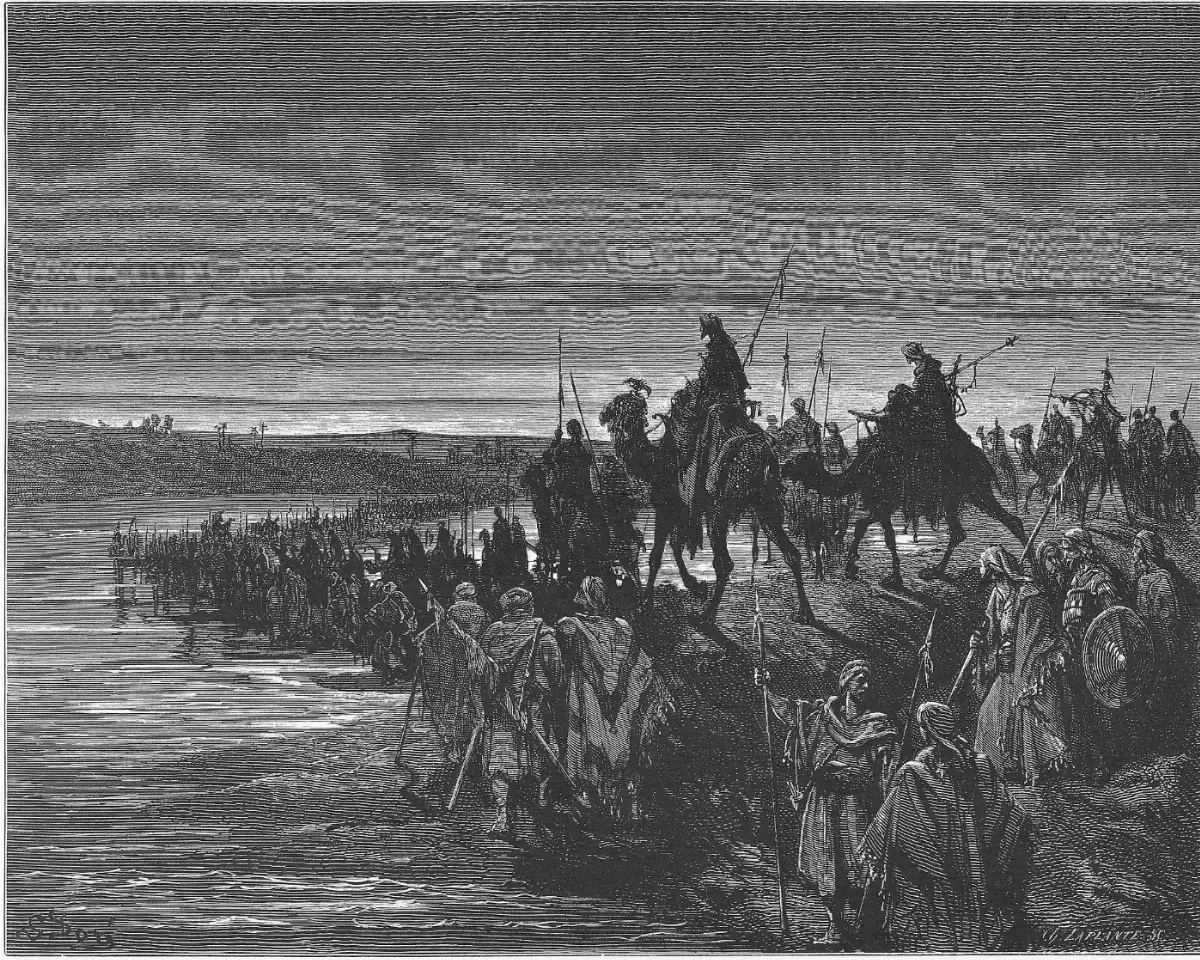

In seventh chapter of John’s Book of Revelation, he tells of representatives from the twelve sons of Israel (formerly named Jacob) being inducted into eternal glory. There were twelve thousand from the twelve tribes.
And I heard the number of the sealed, 144,000, sealed from every tribe of the sons of Israel:
Revelation 7:4
The next four verses list them as The Twelve Tribes of Israel—but the tribe of Dan is not listed. Instead, we find the name of Manasseh included. He was a grandson, not a son.
But why not Dan? That tribe’s absence is noted by millions of people, many proposing off-the-wall reasons. Some claim Dan’s tribe moved to Europe, to India, or even to North America to build massive cities and father the American Indians. Few true believers give credence to such ravings. The Bible indirectly leads us to the real truth.
At least two thousand years ago, Israel and his sons were led to Egypt by Joseph, one of the sons, thus preserving the family from famine and allowing them to grow into a nation.
Israel grew old in Egypt. Sensing his impending death, he called his family together to bless them with prophecies of their tribes. In addition to his sons, he also blessed the tribes of Manasseh and Ephraim, the sons of Joseph. That makes fourteen tribes. Yet there are only twelve names in the Book of Revelation: Dan and Ephraim, Joseph’s other son, are missing.
Looking at the tribe of Dan, we find reasons for their disqualification. First, they failed to capture the land they had been allotted. Dan could not —or would not—conquer their inheritance when the Nation of Israel returned to the Holy Land. Rather than fight for it as instructed, they decided to move elsewhere. Eventually they invaded a peaceful land and established themselves there by defeating the population who had no one to turn to for help.
And there was no deliverer because it was far from Sidon, and they had no dealings with anyone. It was in the valley that belongs to Beth-rehob. Then they [Dan] rebuilt the city and lived in it.
Judges 18:28
Dan was also the first of the Twelve Tribes to condone child sacrifice, the Canaanite practice that God repeatedly cited as an abomination.
And they named the city Dan, after the name of Dan their ancestor, who was born to Israel; but the name of the city was Laish at the first. And the people of Dan set up the carved image for themselves, and Jonathan the son of Gershom, son of Moses, and his sons were priests to the tribe of the Danites until the day of the captivity of the land.
Judges 18:29-30
They had failed to take the land they had been given, and they had abandoned God. They soon shrank into non-existence. No wonder that tribe is not listed in John’s vision!
But what about Ephraim? He was not a son, but was one who was blessed by Israel. Unfortunately, most people fail to read further when they finish scanning the list—bot the very next verse tells it all:
After this I looked, and behold, a great multitude that no one could number, from every nation, from all tribes and peoples and languages, standing before the throne and before the Lamb, clothed in white robes, with palm branches in their hands…
Revelation 7:9
A thousand years after the story of Dan ends, Ephraim had been carried into captivity by the Assyrian Empire. To ensure no future rebellions, Assyria scattered them into the far-flung world—including Eastern Europe. They no longer existed as a tribe. Yet, one hundred and fifty years after their disappearance, the prophets Jeremiah and Ezekiel foretold a different future!
…but ‘As the LORD lives who brought up the people of Israel out of the north country and out of all the countries where he had driven them.' For I will bring them back to their own land that I gave to their fathers. (Jeremiah 16:15)
Is Ephraim my dear son? Is he my darling child? For as often as I speak against him, I do remember him still. Therefore my heart yearns for him; I will surely have mercy on him, declares the LORD.
Jeremiah 31:20
Most Bible readers know about Ezekiel’s vision of the valley filled with dry bones. God asked if those bones might live again, and Ezekiel deferred to God’s judgement on that!
So I prophesied as I was commanded. And as I prophesied, there was a sound, and behold, a rattling, and the bones came together, bone to its bone. And I looked, and behold, there were sinews on them, and flesh had come upon them, and skin had covered them. But there was no breath in them. Then he said to me, “Prophesy to the breath; prophesy, son of man, and say to the breath, Thus says the Lord GOD: Come from the four winds, O breath, and breathe on these slain, that they may live.” So I prophesied as he commanded me, and the breath came into them, and they lived and stood on their feet, an exceedingly great army.
Ezekiel 37:10-14
Ephraim did make the list, but they were not limited to twelve thousand people as the others were. And, in 1948 they fulfilled the prophets’ predictions as they began to return from the north country to Israel. And they did not come as dry bones!