Miriam, Powerful and Tragic
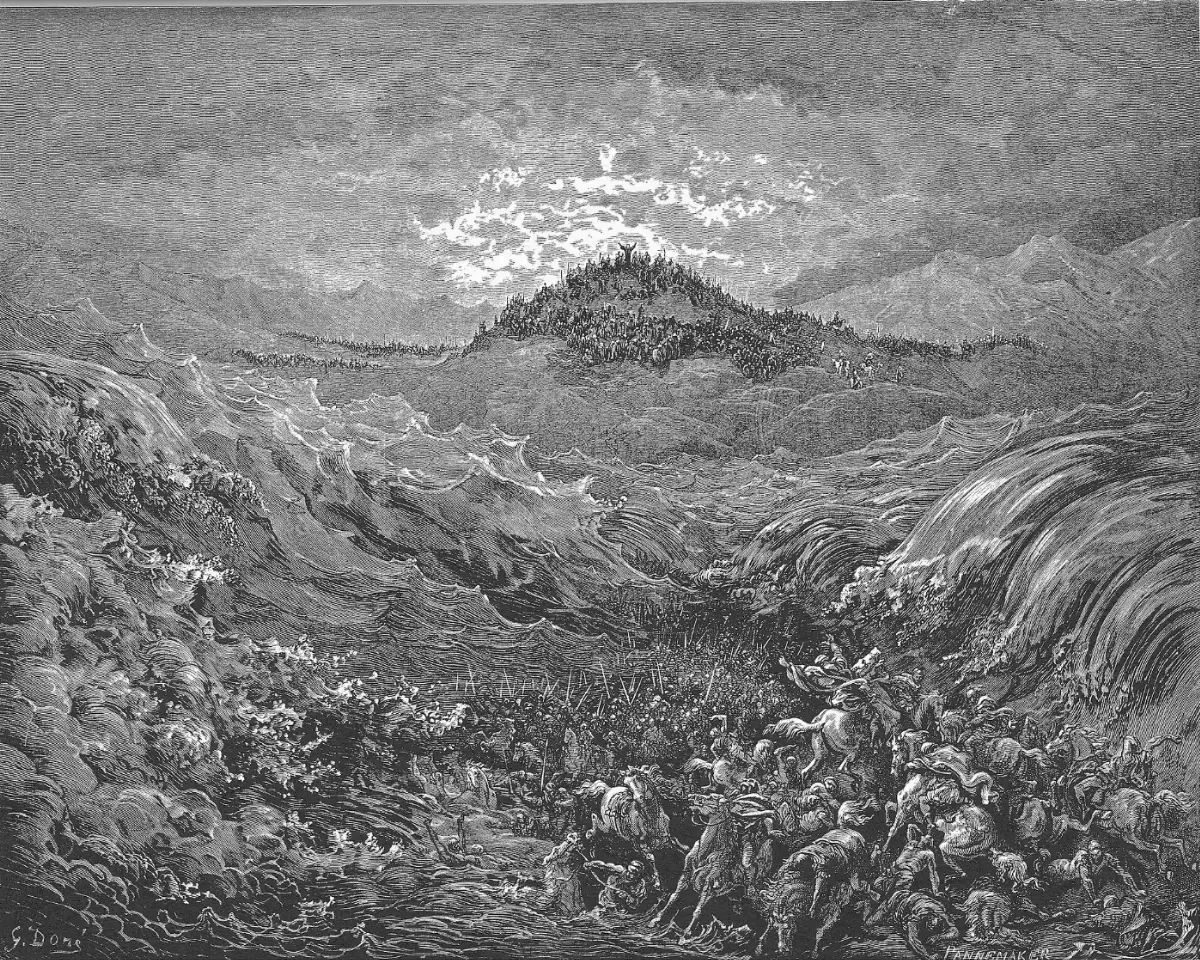

Miriam was an older sister of Moses, the leader of the Children of Israel, a Priestess to the hordes of people along with another brother, Aaron, the High Priest. Our first great impression of her is on the eastern side of the Red Sea. We find her there just after God had delivered the people from slavery by the Egyptians by drowning their army in the sea. The Hebrew slaves were free for the first time in four hundred years. It was a joyful moment, and Miriam acted accordingly.
Then Miriam the prophetess, the sister of Aaron, took a tambourine in her hand, and all the women went out after her with tambourines and dancing. And Miriam sang to them:
“Sing to the LORD, for he has triumphed gloriously;
Exodus 15:20-21
the horse and his rider he has thrown into the sea.”
It must have been quite a spectacle. She was over eighty years old, and there she was with her feet on the sunny sands of the beach, probably with her long gray hair blowing in the hot breeze, parading and dancing with “all the women” while singing a repetitive song of deliverance to the beat of her tambourine. It has been said that there on that eastern shore, the Jewish people became a nation as she led their celebration.
Miriam served the people with Moses and Aaron while their years-long journey filled with needs and hardships of what has been estimated to have as many as a million Hebrew people! But along the way, all did not go well with her. Some years after the celebration the people begn to grumble, and she and Aaron expressed dissatisfaction with Moses.
Miriam and Aaron spoke against Moses because of the Cushite woman whom he had married, for he had married a Cushite woman. And they said, “Has the LORD indeed spoken only through Moses? Has he not spoken through us also?” And the LORD heard it.
Numbers 12:1-2
That second verse reveals a motive fueled by jealousy of God’s personal relationship with Moses. The marriage was simply a handy reason to express discontent. The Cushite people were of Ethiopian descent—making it likely that Moses’s bride was a Black lady. It seems that Miriam was offended by that. God’s reaction to their reactions lead us to believe that Miriam was the primary instigator.
And suddenly the LORD said to Moses and to Aaron and Miriam, “Come out, you three, to the tent of meeting.” And the three of them came out.
And the LORD came down in a pillar of cloud and stood at the entrance of the tent and called Aaron and Miriam, and they both came forward. When the cloud removed from over the tent, behold, Miriam was leprous, like snow. And Aaron turned toward Miriam, and behold, she was leprous.
Numbers 12:4-10
Her punishment lends credibility to the suspicion of racial bias. Miriam had a dislike for Blacks, so she suddenly found herself covered with the leprous white sores. God sent her away from the encampment for seven days. At that time, she might be found to be clean. But then came the ultimate blow. Leprous people could only be pronounced clean after a full bodily inspection by the Chief Priest—her brother, Aaron himself. The shame of both people was almost too much to bear. God does not condone rejection of His work.
Although Miriam was accepted back into the nation, the only remaining report of her further impact was a very short notation:
And the people of Israel, the whole congregation, came into the wilderness of Zin in the first month, and the people stayed in Kadesh. And Miriam died there and was buried there.
Numbers 20:1